Chapters
- 0:00The questions this episode answers
- 0:43Who is Michael Fauscette
- 1:09Why companies buy software and stop using it
- 2:01The buyer is far from the user
- 2:58Paying for software nobody uses
- 3:31Trust is fragile: one bad AI answer
- 4:28What AI pilots that reach production have in common
- 6:46Pilots fail people first, data second
- 7:48Does the owner know he is the problem?
- 8:53Train the managers first
- 9:42Automating a broken process
- 11:30The New York City AI chatbot
- 12:48A $10,000 AI budget: what goes first
- 14:36Before you hire an AI builder
- 15:513 questions to ask on the AI demo call
- 17:47The AI tools a research analyst actually uses
- 21:04Just because you can does not mean you should
- 22:01Where to connect with Michael
You paid for an AI tool. Your team used it for a month. Then everyone went back to the old way.
I asked someone who has watched this happen for years. Michael Fauscette ran enterprise software research at IDC for almost ten years. Then he was Chief Research Officer at G2. Now he runs Arion Research.
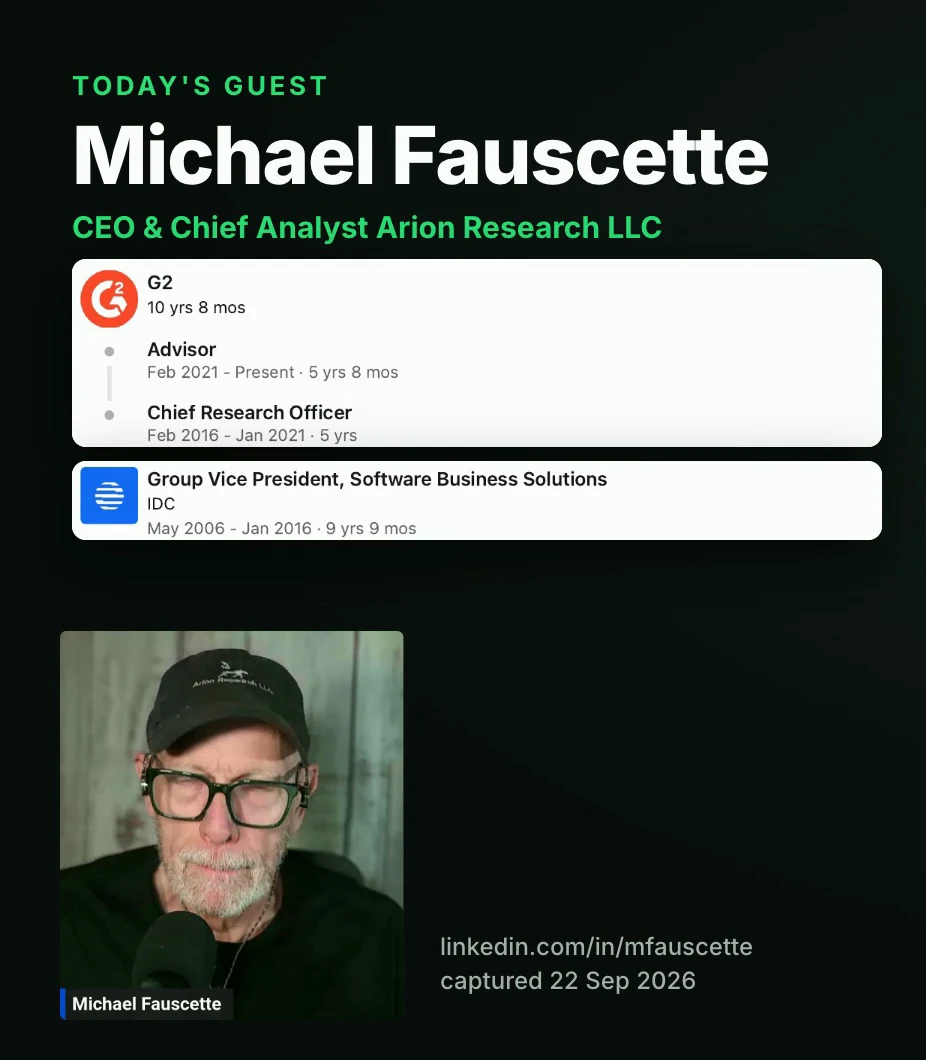
I gave him one question. You have $10,000 for AI. Where does it go?
His first answer: spend nothing.
Why do AI projects fail?
Short answer: the people around the tool fail it first. The tool fits nobody's day. The team does not trust it. And the owner never uses it himself.
Michael put it plainly:
pilots fail people first, data second, technology's, uh, almost the third.
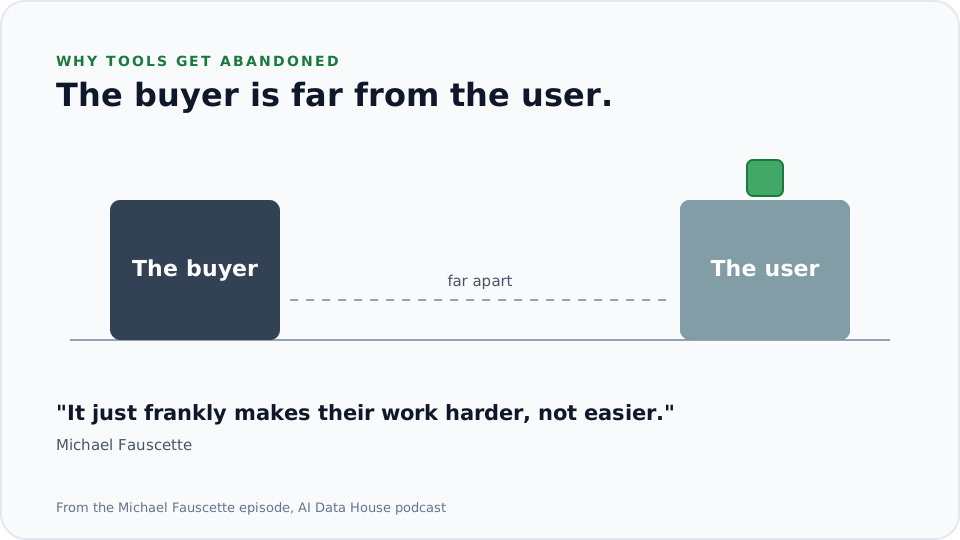
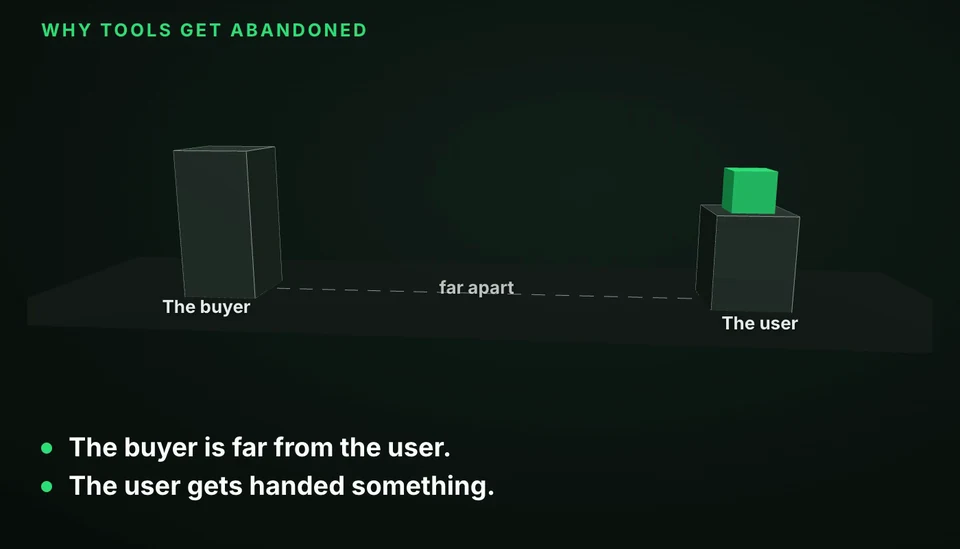
The buyer is far from the user
The person who buys the tool is rarely the person who uses it. The user gets handed something new. It does not fit how they work.
It just frankly makes their work harder, not easier.
The software you already pay for
This gap is old. It started long before AI.
One bad answer and it is over
AI adds one more problem. The output changes from run to run. So your team waits for it to slip.
trust is fragile, so one bad answer, one bad outcome and, and, and the team doesn't trust the tool anymore.
And the tool itself is often fine.
'Cause often the technology works just fine, the people don't.
Weeks 1 and 2: spend nothing
This is the part I did not expect.
I would spend nothing at first, and in the first two weeks, spend that time documenting the processes that take up the most time
I picked the $10,000 for the question. It is a what-if, not our price.
Do this Monday: Write down the 5 tasks that eat the most hours. Who does each one. How often. How long it takes.
That list costs you nothing. It is also the first thing any good builder will ask for.
If you want a second pair of eyes, see what to automate first in a growing business.
Wrote your list?
Send us the task that eats the most hoursYour first build: internal, repetitive, reversible
Now you spend. But only on one kind of task.
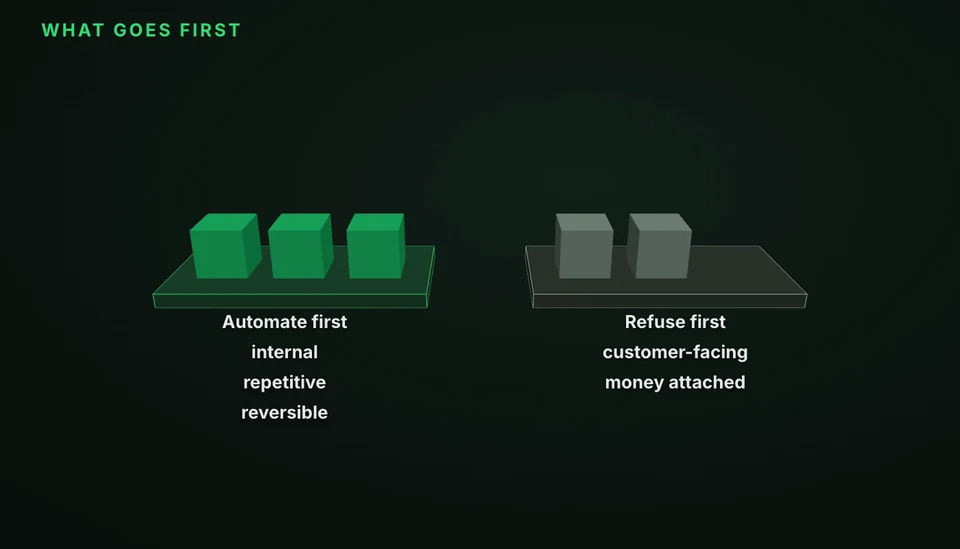
Automate that, you know, internal, repetitive, reversible piece of it. Refuse anything that's customer-facing first, with money attached especially, and, and anything that's custom-built.
So look for off-the-shelf
Three tests for your first task:
- Internal. Your team sees it. Customers do not.
- Repetitive. It happens every day or every week.
- Reversible. A mistake takes one click to undo.
I told him on the call:
Yeah, reversibility is a very important factor.
What happens when you skip that rule
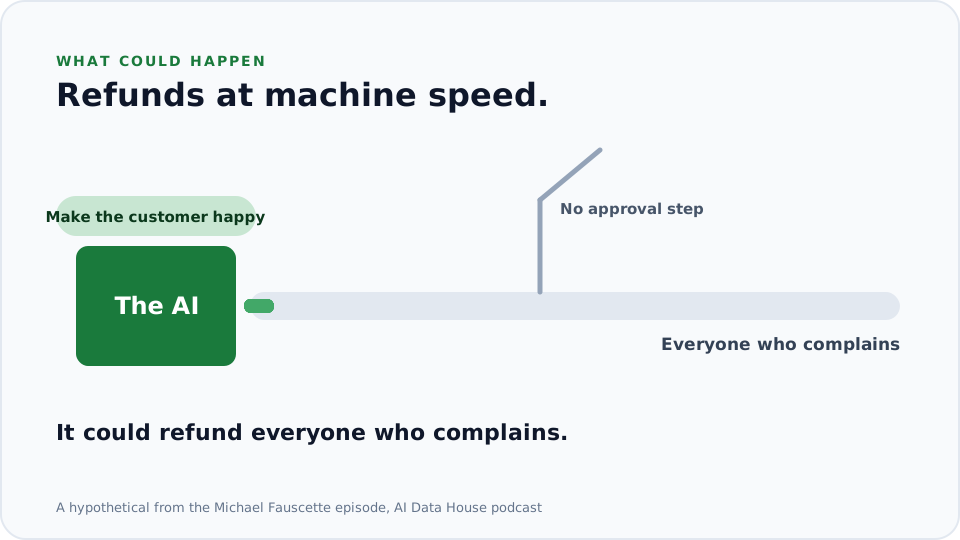
Michael's warning was about refunds. Tell an AI agent to "make the customer happy" and it will.
Well, that's not an outcome, right?
I could keep your customers really happy by refunding everybody who complains at, at, at machine speed.
Do this Monday: Take your list of 5 tasks. Cross out anything that touches customers or money. Pick your first build from what is left.
How we do it: One of our builds is a bookkeeping agent. You send a photo of a receipt into a chat. It saves the file in Google Drive. It adds a row to a Google Sheet. It sends back a tick. A wrong row? You delete it. Once it is set up, it runs on your account.
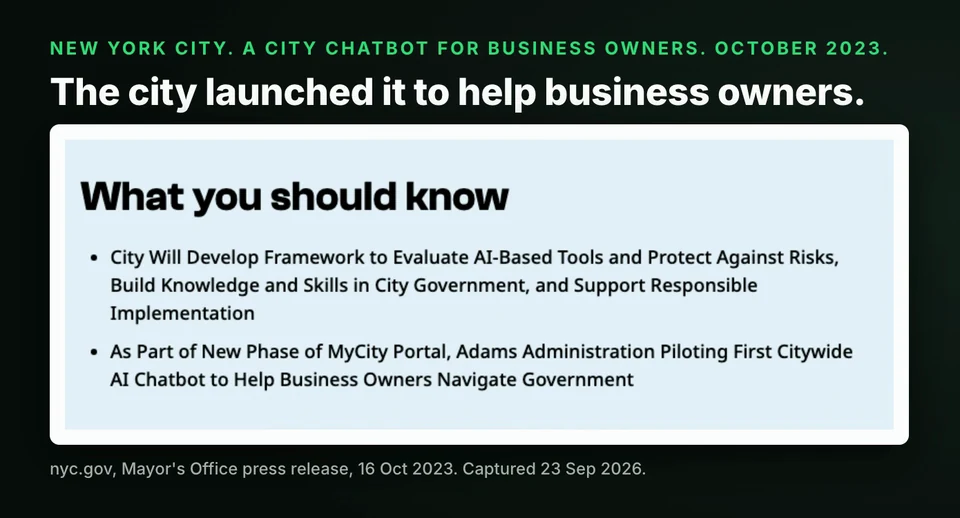
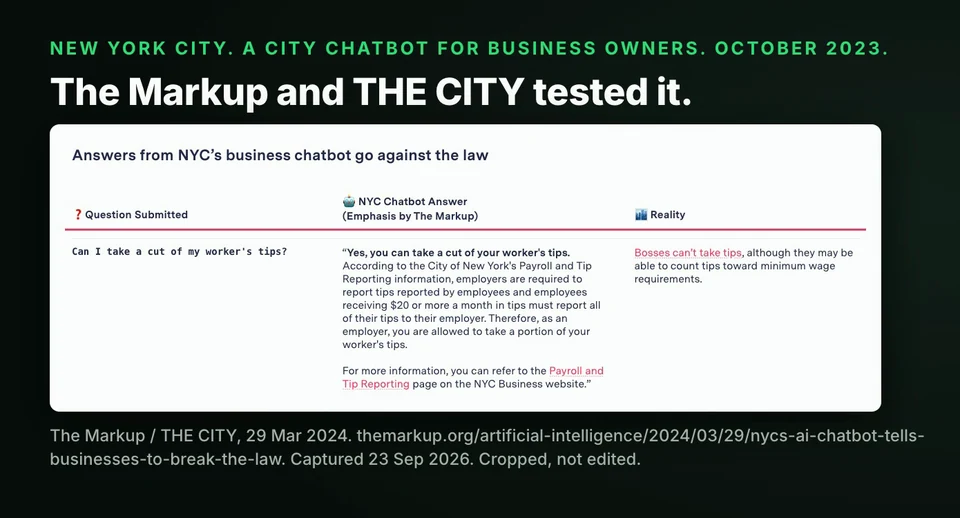
Before you spend, put a number on it.
The owner uses it first
This one is on you, the owner.
the owner has the power to keep doing it the old way and no one will push back.
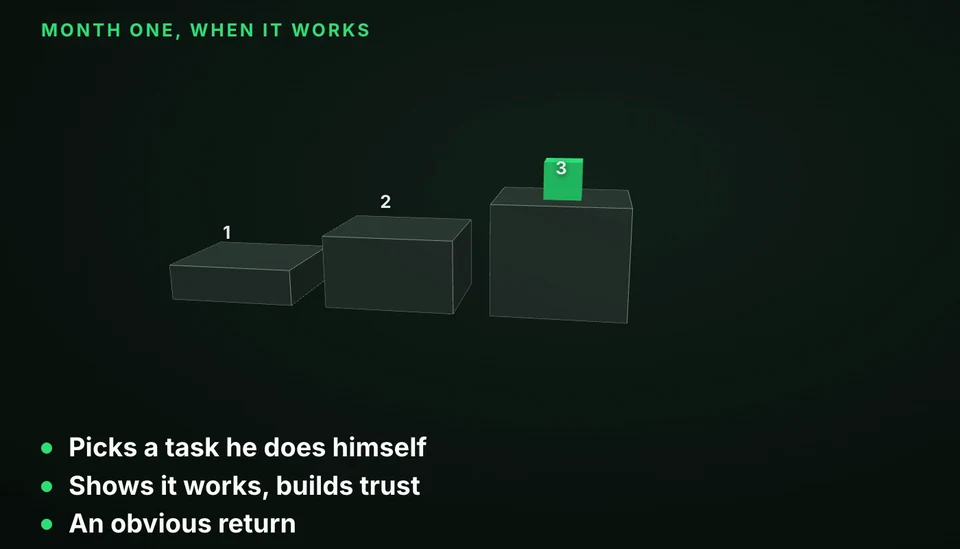
When it works, he said:
the owner picks a task they do personally, they show that it works, they build that trust
Do this Monday: Pick one task you do yourself. Use the tool on it for a week. Do it where your team can see.
How we do it: Our own AI agents write drafts. Nothing goes out until I read it. I use them every day. So the team does too.
Build trust slowly
Do not hand the tool the keys on day one. Start with a person checking everything. Then step back, bit by bit.
I'm gonna step back, and I'm gonna put humans in the lead versus human in the loop.
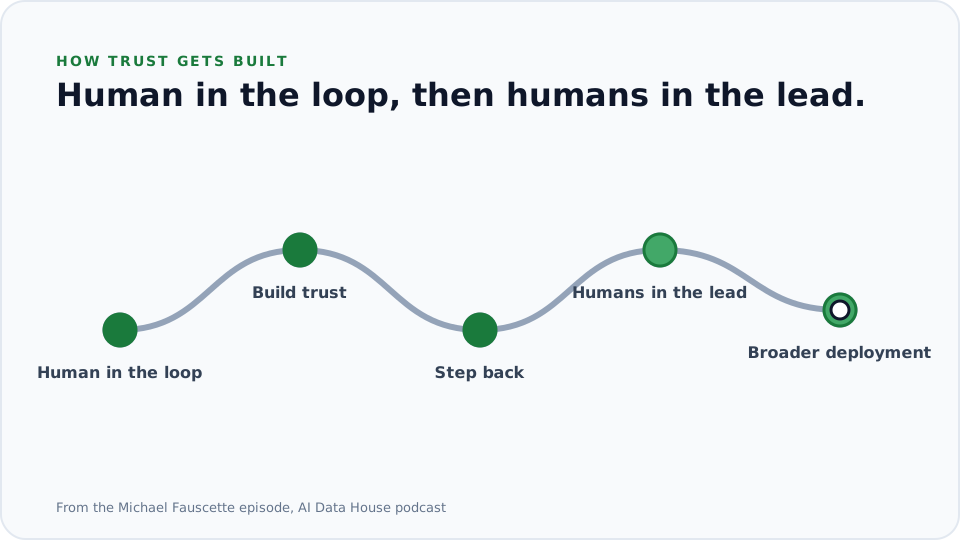
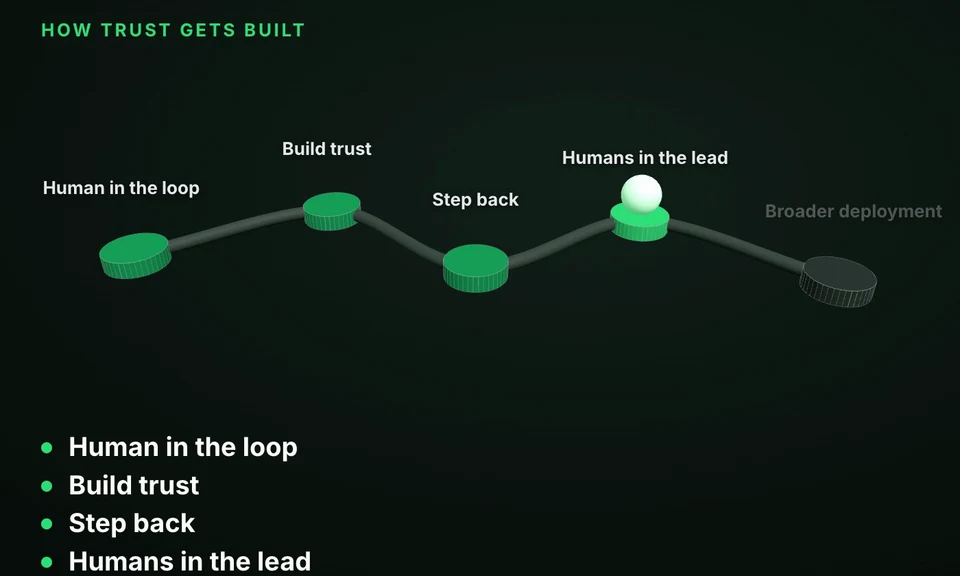
Do this Monday: For the first month, a person checks every output. Count the mistakes each week. When the count stays low, check less.
3 questions to ask before you hire an AI builder
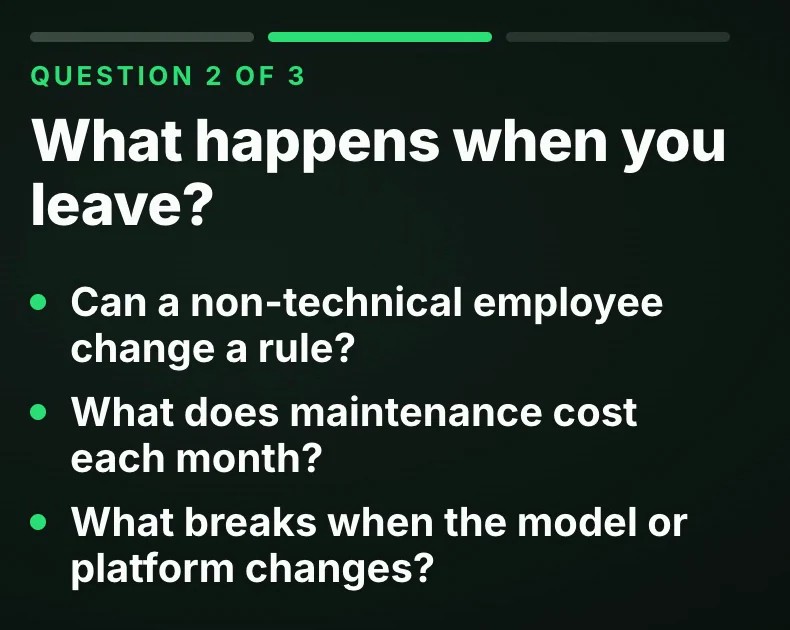
The demo is the easy part. Month four is where it breaks. The builder is gone and nobody can fix it. These three questions catch that early.
How we answer them: Ask us all three on the first call. Hold us to the answers.
Just because you can
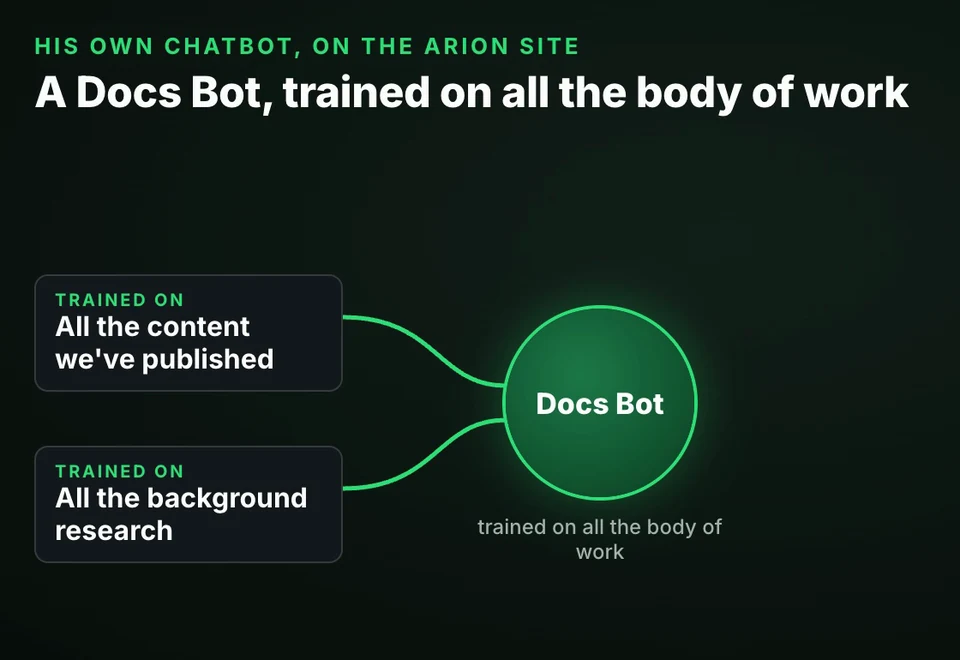
Michael uses AI agents for most of his research. He also drops tools fast.
I have fired more note takers than I've used, to be honest.
Then the line I keep coming back to:
just because you can doesn't mean you should.
don't be afraid to walk away from something when it's not working
FAQ
Why do AI projects fail in small businesses?
Michael's answer: people first, data second, technology almost third. The tool does not fit the team's day, one bad answer kills trust, and the owner does not use it himself.
What should a small business automate first with AI?
A task that is internal, repetitive and easy to undo. Leave anything that faces customers or moves money for later.
What should I ask an AI agency before I hire them?
Ask for the process map before the proposal. Ask who owns the prompts, accounts and logins when they leave. Ask which number you will check in 90 days, and what happens if it does not move.
Can I start with AI for less than $10,000?
Yes. Weeks 1 and 2 cost nothing but your time. You write down the tasks that take the most hours, then pick one.
Watch the full conversation
All 22 minutes are on YouTube. More episodes are on The Awais Rafeeq Show. Next read: how to get ChatGPT to recommend your business.
Michael's work is at Arion Research. He is on LinkedIn.
About the author. Awais Rafeeq is the founder of AI Data House and the host of The Awais Rafeeq Show. His team builds AI agents and automations for businesses.