Business process automation, or BPA, is the practice of handing repetitive, rule-based work to software so your team stops doing it by hand. It is not a single tool. It is a way of running operations. In 4 years and over 500 builds for US businesses, we have found that the companies who win with automation are not the ones with the biggest budget. They are the ones who automate the right things in the right order.
This guide is the map. What BPA actually is, how to find the processes worth automating, the four workflow types that cover almost every business, the order to build them in, and what it costs. If you read one thing before you spend a dollar on automation, make it this.
What Business Process Automation Actually Is
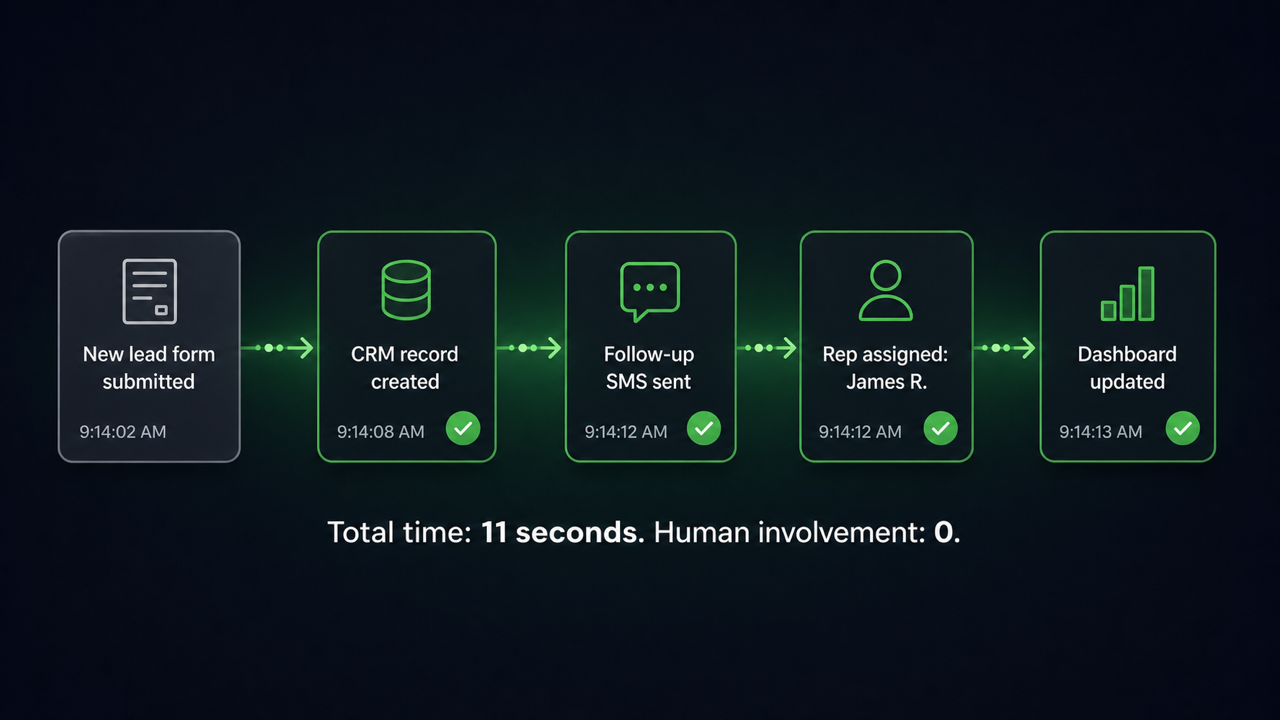
A business process is any repeatable sequence of steps that moves work forward: a lead comes in, gets logged, gets contacted, gets followed up. Automation removes the human from the steps where the decision is already made. The person stays where judgment is needed. The software handles the moving, copying, sending, and updating in between.
The test for whether a step can be automated is simple. Would it get done the same way 1,000 times in a row? If yes, a person should not be doing it. Most businesses have dozens of these steps hiding in plain sight.
How to Find the Processes Worth Automating
Rank every repetitive task by three things: how many hours it eats, how often it happens, and how expensive it is when it goes wrong. The tasks that score high on all three are your starting point. The flashy task is rarely the highest-value one. The boring, frequent, error-prone task usually is.
The Four Workflow Types That Cover Almost Every Business
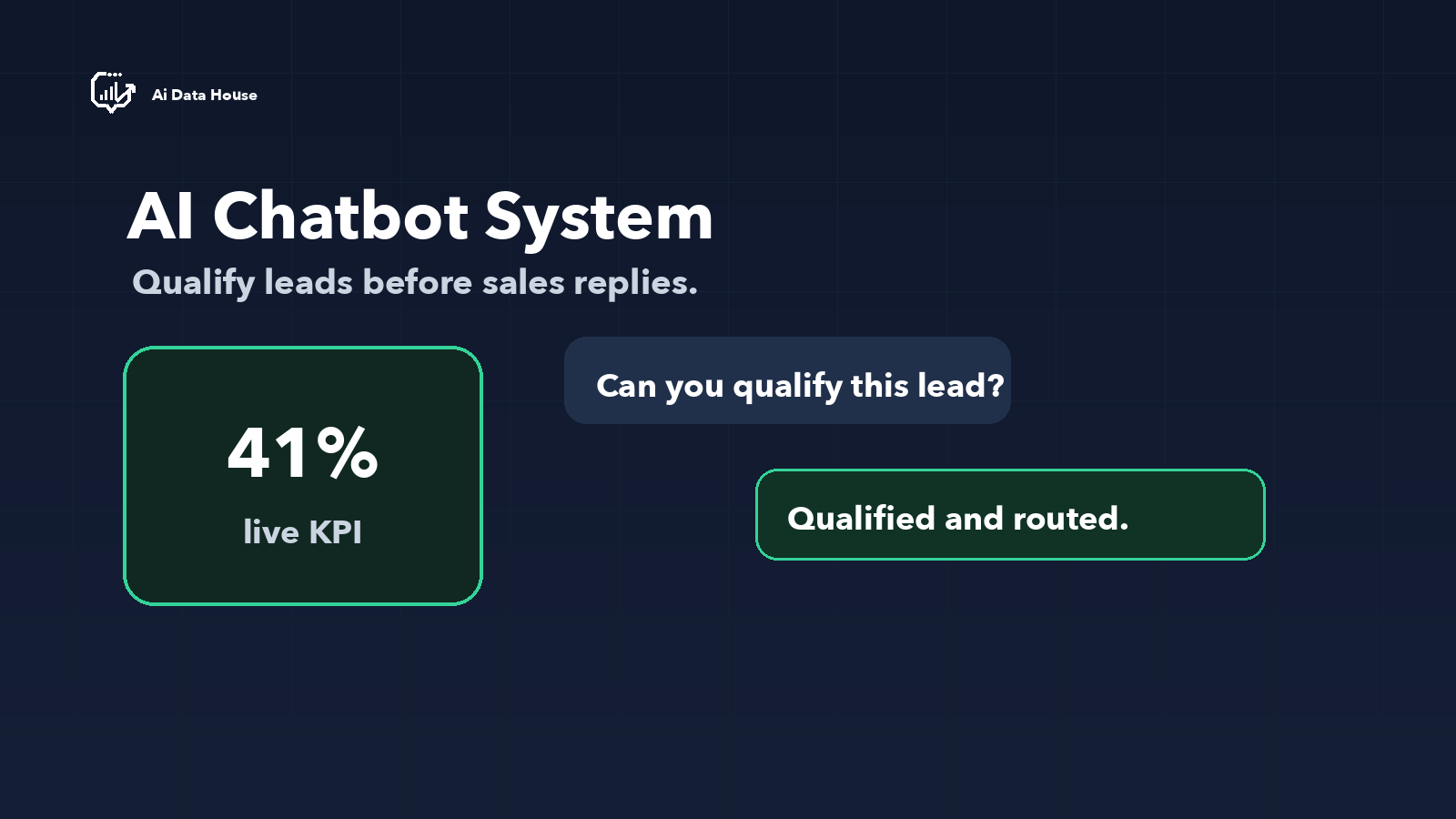
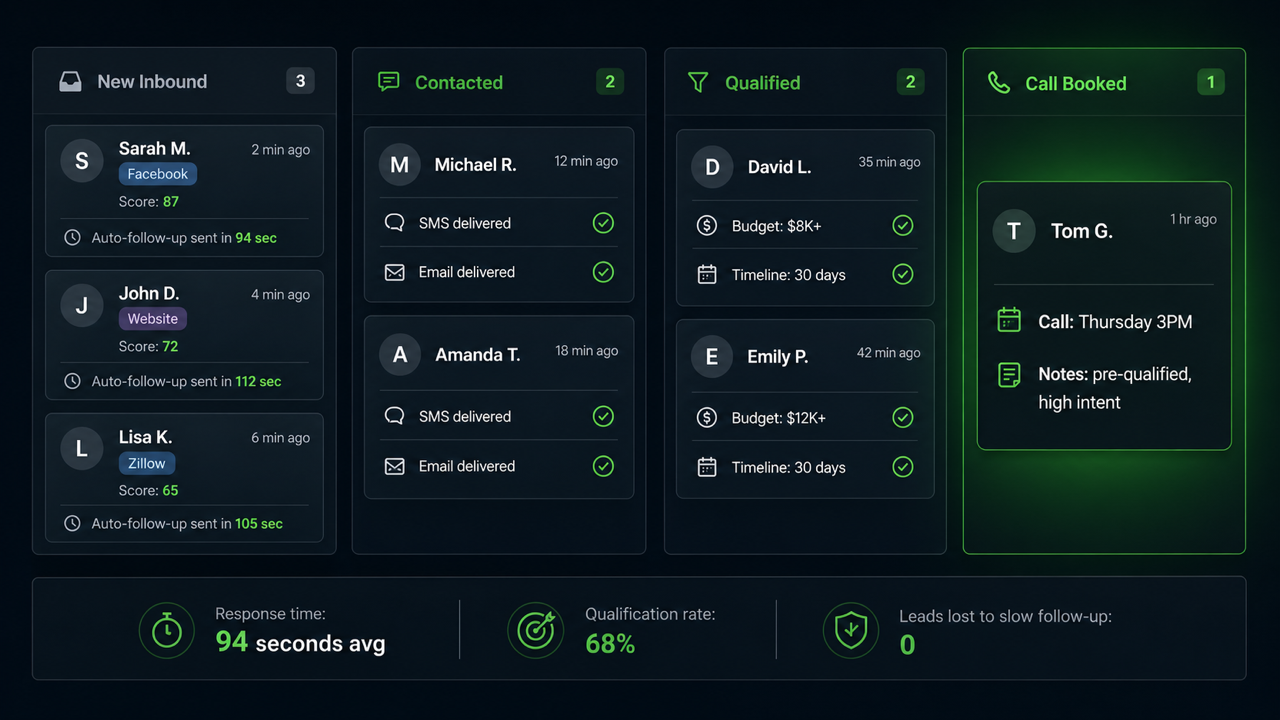
- Lead and sales workflows: capture, route, follow up, and log every lead automatically
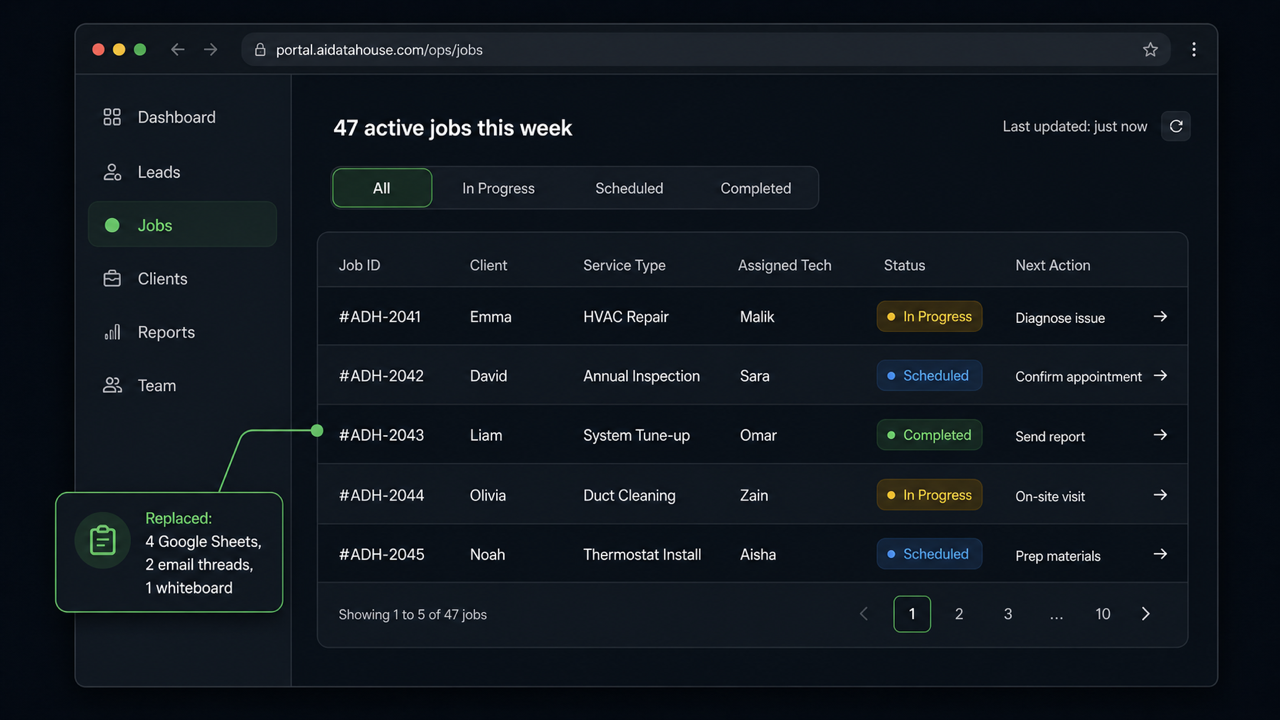
- Operations workflows: job assignment, status updates, internal handoffs, and document generation
- Customer-facing workflows: support responses, appointment booking, reminders, and status updates
- Reporting workflows: pulling data from every tool into one live view so no one builds reports by hand
The Order to Build Them In
Start with lead and response automation. It has the highest ROI, the fastest build, and the most visible result. Then booking and confirmations, then reporting and visibility, then internal operations, then client communication. Building in this order means each phase pays for the next, so you are never out of pocket waiting on results.
| Phase | What Gets Built | Timeline | Investment |
|---|---|---|---|
| Phase 1: Lead + Response | Lead capture, CRM entry, follow-up sequence | 1-2 weeks | $1,000-$2,000 |
| Phase 2: Booking | Calendar flow, confirmations, reminders | 1-2 weeks | $1,000-$1,500 |
| Phase 3: Reporting | Dashboard, automated reports, morning briefing | 2-3 weeks | $1,500-$2,500 |
| Phase 4: Operations | Job routing, handoffs, status automations | 2-4 weeks | $2,000-$4,000 |
It is already running for businesses like yours.
An HVAC company with 6 vans came to us spending 40 hours a week on manual scheduling, data entry, and report building. Eight weeks later that was 4 hours. Same team, same volume, just not doing the part a machine could do.
Go deeper
Not sure which process to automate first?
Book a free 30-minute AI Audit. We map your highest-ROI workflow and tell you exactly what to build first, with a number, before you spend anything.